From Aspiration to Practice: Reflecting on Decolonising Higher Education Teaching at the Una Europa Conference
How can the principles of decolonization be translated into everyday teaching practice? At the Una Europa Conference 2026, a UniPID workshop brought together a diverse group to explore practical approaches to decolonizing higher education. Discussions highlighted the importance of recognizing diverse forms of knowledge, questioning existing educational structures, rethinking learning outcomes and assessment practices, and strengthening dialogue across different levels of higher education. The workshop underscored that decolonizing education is an ongoing process of reflection, dialogue and shared responsibility rather than a fixed set of solutions.
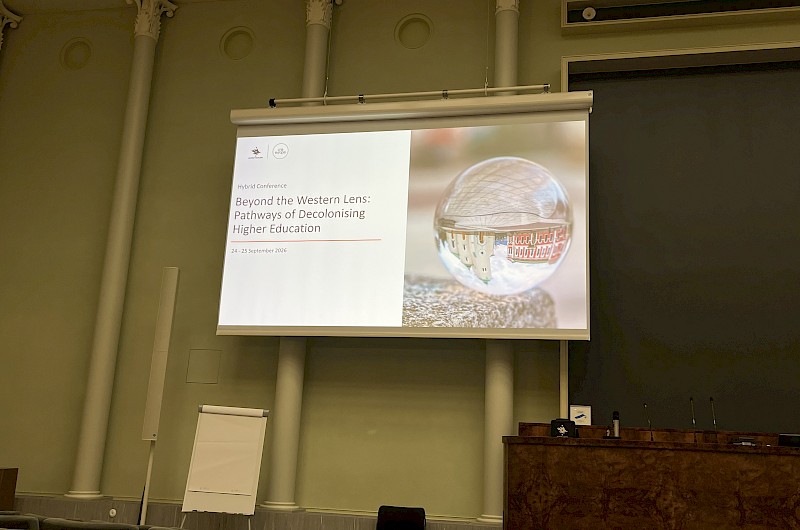
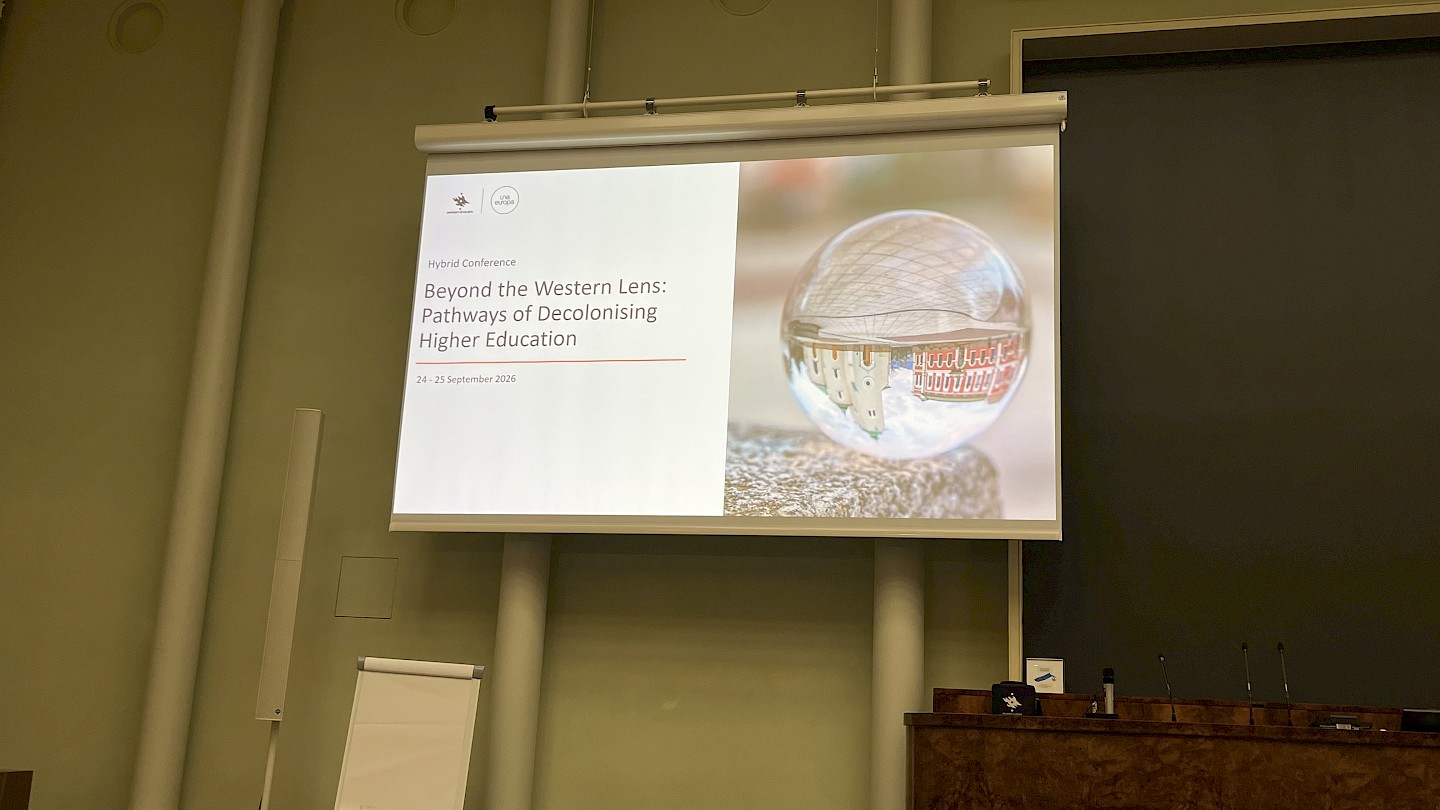
On 24 September 2026, UniPID hosted a workshop at the Una Europa Conference “Beyond the Western Lens: Pathways to Decolonising Higher Education”. The session was facilitated by Meeri Tiensuu from UniPID Coordination Unit, Professor Maria Brochaus (University of Helsinki) and postdoctoral researcher Mariam Aljabaly (University of Helsinki), and brought together participants from different institutions and professional roles across higher education, research and educational practice to collectively explore what decolonizing higher education teaching and learning could mean in practice.
The workshop built on UniPID’s ongoing work on the Ethical Guidelines for Global South Academic Partnerships and invited participants to reflect on how principles such as reciprocity, epistemic plurality and shared knowledge production might be translated into everyday teaching practices and curriculum design.
Rather than seeking definitive blueprints on how to decolonize, the workshop aimed to create space for collective learning, dialogue and critical reflection. Participants were invited to redesign a fictional university course jointly delivered between European and African partner institutions. The scenario intentionally included several characteristics that are common in higher education and teaching collaborations: reading lists dominated by European and North American scholarship, English-only teaching, traditional essay-based assessment and Global South scholars positioned primarily as providers of case studies rather than theoretical contributions.
From Categorizing to Recognizing
One theme that emerged throughout the discussion was the need to move beyond categories such as “Global North” and “Global South”. While these concepts can help illuminate the historical and structural inequalities, participants addressed that meaningful change would also require us to avoid reproducing the same binaries that decolonization seeks to challenge. Decolonizing teaching was therefore seen less as a matter of categories and more as a commitment to recognizing diverse experiences, perspectives and ways of knowing.
Participants highlighted the importance of listening. Decolonizing education is not a checklist but an ongoing process that requires reflection, dialogue and active listening.
Another central point emerging from the workshop was the crucial role of teachers and educators. While broader institutional structures such as funding shape what is possible within higher education, teachers have considerable influence over learning environments, course design, classroom practices and assignments, and interactions with students.
Participants discussed the need to recognize different forms of expertise, encouraging students to reflect on their own positionality, for instance through activities such as the Privilege Wheel exercise, and creating opportunities for multiple perspectives to be heard. At the same time, participants noted that individual educators often operate within constraints. Funding mechanisms, institutional policies, accreditation requirements, and broader socio-economic structures can limit opportunities for transformative change. The discussion therefore moved beyond the classroom to consider the wider systems that shape higher education, including funding structures and the influence of capitalism on knowledge production and educational priorities.
The discussion also highlighted that efforts to decolonize teaching need to involve actors across different levels of higher education systems. Participants reflected on the importance of bringing together po licymakers and funders who shape priorities and resources; institutional leaders and programme coordinators, who translate these priorities into structures and curricula; and teachers who ultimately design and deliver learning experiences. Participants emphasized that meaningful change requires dialogue between all three levels. Shared discussions on the objectives, values, and learning outcomes of courses could help to align broader institutional goals with everyday teaching practices and student learning experiences.
Rethinking Learning Outcomes and Educational Purpose
Bringing the discussion back from political structures to the classrooms, learning outcomes became another key topic of discussion. Participants suggested that efforts to decolonize teaching might benefit from starting with fundamental questions: What is it that ‘should’ be learned? What are the envisioned learning outcomes? These questions should be discussed not only among the teachers, but also among the students and by paying attention to different perspectives.
If the goal is to develop critical thinking, reflectivity, intercultural competence and an understanding of diverse knowledge systems, then course content, teaching methods, and assessment should align with those objectives. From this perspective, learning outcomes become a starting point for rethinking the entire educational process.
The discussion also highlighted the need for additional support and training for educators. Many teachers have the willingness to make their classrooms more equal and embrace diversity but lack time or tools. Participants noted growing interest in anti-racist pedagogies and inclusive teaching approaches and that many educators would benefit from opportunities to further develop their knowledge and skills in these areas.
Assessment emerged as another key area for decolonizing teaching in practice. Participants questioned whether traditional assessment methods always allow students to demonstrate learning in a meaningful way. Among the ideas explored were contract-based assessment models and approaches that give students responsibility in evaluating their own learning. At the same time, it was noted that students can also be very resistant to new assessment techniques. This also prompted reflection on how deeply many established assumptions about learning and assessment remain embedded in higher education. Drawing on Franz Fanon's ideas, participants agreed that decolonization should begin not only with institutions but also with ways of thinking.
Looking ahead
One of the key takeaways from the workshop was that decolonizing higher education is not only about changing course content. It is also about examining who teaches, who makes decisions, whose knowledge is valued, who benefits from educational processes and how learning is assessed.
The discussion demonstrated that while there are no simple solutions, there are some practical entry points. Whether through more inclusive curricula, new assessment methods, critical reflection on positionality or stronger support structures for educators, meaningful steps can be taken.
For UniPID, the workshop offered valuable insights that will continue to inform our work on ethical partnerships, virtual studies development, and broader discussions on responsible, reciprocal, and equitable approaches to higher education teaching and learning.
Photo credits: Yannick Ilunga (2026), YannIlunga.me