
Working Together with the Development Policy Committee – Why Academic Perspectives Matter?
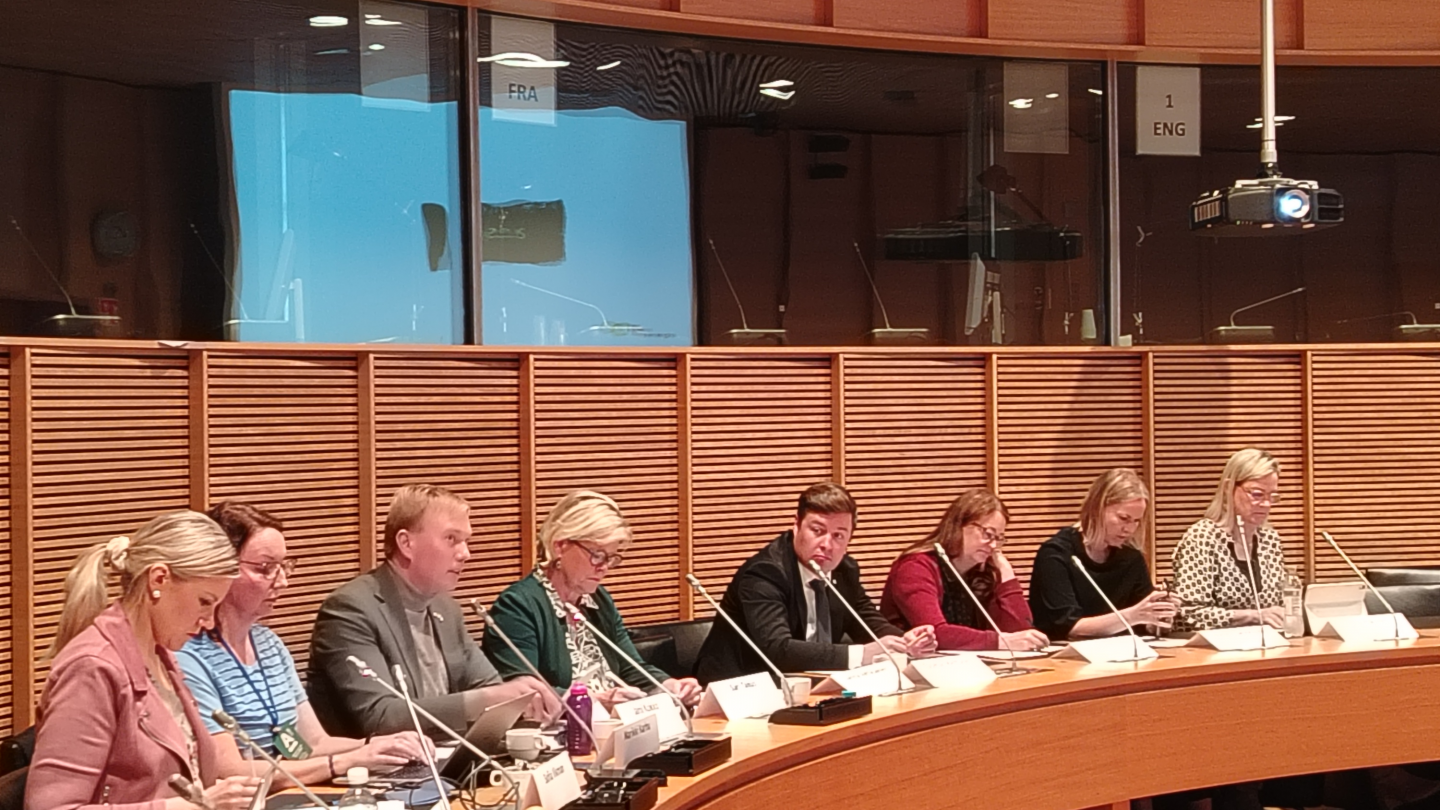
Universities and research ought to have an increasingly prominent role in Finland's development policy moving forward. The sector requires objective knowledge producers more than ever to balance rising political and economic interests. Active collaboration in the Development Policy Committee provides an opportunity for this.
What happens when members of parliament, development experts, civil servants, civil society actors, interest groups representatives and researchers sit around one table to discuss Finland’s role in global sustainable development?
In Finland, this takes place through the Development Policy Committee (DPC), an official advisory body to the Finnish government. As a broad-based forum, it facilitates informed development policy debate, knowledge exchange, and the formulation of joint positions. Since it was founded in 2002, the Committee has served as a bridge between policy, practice and expertise, monitoring and analysing development policy. At its core, the Committee seeks to strengthen both the effectiveness of development policy and the dialogue surrounding it.
Structurally, the DPC comprises 20 full members and their deputies. In addition, the DPC has expert members from, among others, the Ministry for Foreign Affairs and other branches of government. The Committee is chaired by three Members of Parliament, representing both the government and the opposition parties, while a two-person secretariat is responsible for planning, coordination and implementation of the Committee operations.
The Committee work is organized in a specific working programme (2024-2027) and carried out through plenary sessions, working committee meetings, hands-on expert groups and advocacy work. It issues statements and recommendations on significant development policy proposals to the government, decision-makers, and the wider public. Organising seminars and other public events is also an important part of Committee’s work.
The normative base of the Committee is grounded in international agreements and guidelines concerning development assistance, humanitarian aid, human rights and sustainable development. Research evidence, evaluations and the DPC’s own publications inform its work. However, the DPC is a political space, and brings together different —and sometimes competing —political ideologies, interests and priorities. As development policy becomes increasingly intertwined with (geo)political and economic interests, maintaining a strong evidence base is more important than ever.
UniPID in the Development Policy Committee
UniPID has held full membership in DPC since 2016. While UniPID’s role has always been active, there is clear potential to do more. Today, as the global development landscape and Finnish policies shift fast, an active role for academic representatives has become critical.
Over the last two committee terms, UniPID has contributed to everything from shaping strategies and joint statements to hands-on planning and advocacy. With the DPC navigating a massive, complex mandate on a tight budget and with minimal staff, UniPID’s support has been important. The Committee has also greatly benefited from research produced through the UniPID Development Policy Studies (DPS), as well as joint lectures and panel discussions.
One of the main challenges in deepening collaboration lies in coordination, which requires time and resources from both sides. UniPID representatives, on top of their personal expertise, are also valuable links to the wider academic community and networks. Ideally there should be time and established mechanism for internal consultations before Committee meetings and deadlines. This requires that universities, for their part, recognize societal impact and policy engagement as a key component of academic work. In turn, the Committee should bring policy-makers and interest groups into closer and more systematic contact with knowledge-producers.
The need for a stronger academic voice in Finnish Development Policy
The DPC’s work is based on the Government Decree on the Development Policy Committee (1071/2019). Its mandate includes building dialogue, monitoring Finland’s development policy and international commitments, supporting sustainable development across policy sectors, formulating common positions and recommendations for the government, and raising awareness of current development policy issues.
For each of these tasks, there is a clear need for the academic perspectives that UniPID can support with.
First, it is critical that policymakers listen to those who possess solid, research-based knowledge and a deep contextual understanding of the issues at hand. Because politicians have limited time to dive into academic literature, the Committee’s debates offer a practical way to channel research findings and fresh insights directly into political dialogue.
Second, monitoring development policy is a politically sensitive task, where government parties tend to defend their line while the opposition tries to challenge it. Therefore, the Committee’s work must be anchored in both an understanding of international commitments and unbiased assessments of how well Finland is meeting them. While the Ministry for Foreign Affairs’ own evaluations are a vital source of information, they are simply not enough on their own.
Third, the success of development policy is measured by how well cooperation works on the ground and whether it leads to forward-looking outcomes in international forums. As national interests and Finland-centric mindsets grow, there is a risk that the realities and priorities of partner countries receive less attention. Researchers often work closely with local communities, institutions, civil society and organisations. Through these partnerships, they can help generate knowledge together with local actors and bring those perspectives and experiences into policy discussions.
Looking ahead
Today’s political climate challenges the very purpose of development policy in Finland and globally. Reducing poverty and inequality in accordance with international commitments no longer suffice politically.
In this shifting context, voices that champion a long-term perspective while offering innovative new openings are more welcome than ever. Universities and research communities have an important role to play. By bringing research, diverse perspectives, and global partnerships into policy discussions, they help ensure that Finnish development policy remains informed, responsible and responsive to a rapidly changing world.
For UniPID, engaging with the Development Policy Committee’s work is more than representation. It is a way to create pathways between research and decision-making, and strengthen Finland’s capacity to engage with global development challenges during these turbulent times.
Want to explore the topic further? Listen to the UniPID Podcast Detangling Development featuring Marikki Karhu and dive deeper into the research-based policy-development.
Latest posts

Face Behind the Course: Meet Ridwan Abukari
September 10, 2026